GoPro IT Consultants - Managed IT Services and Solutions Logo
  • Home
  • About Us
  • Global Coverage
  • Services
    • Managed IT Services
      • Managed Firewall Services
      • Managed IT Support and Infrastructure Services
      • Managed Network Services
      • Managed End User Computing (EUC) Services
      • Managed IT Services Pricing
    • White Label IT Services and Solutions
    • IT Asset Disposal Services
    • Break/fix
    • Unified Communications
      • Managed VoIP Services
      • Audio and video conferencing solutions
      • IP CCTV Installation
    • Wireless Site Surveys
      • Ekahau WiFi Site Survey
      • Air Magnet Site Survey
    • Data Backup and Recovery Management Services
    • Datacenter Support
    • Electronic Point of Sale – EPoS
    • IT Outsourcing Services
    • IT Asset Management – ITAM
      • IMAC IT Services
      • IT Asset Disposition – ITAD
    • Retail IT Services
    • Rollouts
  • Blog
  • Forms
    • Engineer Onboarding Form
    • GoPro Consultants Invoice
    • Site Visit Report
  • Contact us

Search

GoPro IT Consultants - Managed IT Services and Solutions Logo
  • Home
  • About Us
  • Global Coverage
  • Services
    • Managed IT Services
      • Managed Firewall Services
      • Managed IT Support and Infrastructure Services
      • Managed Network Services
      • Managed End User Computing (EUC) Services
      • Managed IT Services Pricing
    • White Label IT Services and Solutions
    • IT Asset Disposal Services
    • Break/fix
    • Unified Communications
      • Managed VoIP Services
      • Audio and video conferencing solutions
      • IP CCTV Installation
    • Wireless Site Surveys
      • Ekahau WiFi Site Survey
      • Air Magnet Site Survey
    • Data Backup and Recovery Management Services
    • Datacenter Support
    • Electronic Point of Sale – EPoS
    • IT Outsourcing Services
    • IT Asset Management – ITAM
      • IMAC IT Services
      • IT Asset Disposition – ITAD
    • Retail IT Services
    • Rollouts
  • Blog
  • Forms
    • Engineer Onboarding Form
    • GoPro Consultants Invoice
    • Site Visit Report
  • Contact us

Search

GoPro Consultants
  • Home
  • About Us
  • Global Coverage
  • Services
    • Managed IT Services
      • Managed Firewall Services
      • Managed IT Support and Infrastructure Services
      • Managed Network Services
      • Managed End User Computing (EUC) Services
      • Managed IT Services Pricing
    • White Label IT Services and Solutions
    • IT Asset Disposal Services
    • Break/fix
    • Unified Communications
      • Managed VoIP Services
      • Audio and video conferencing solutions
      • IP CCTV Installation
    • Wireless Site Surveys
      • Ekahau WiFi Site Survey
      • Air Magnet Site Survey
    • Data Backup and Recovery Management Services
    • Datacenter Support
    • Electronic Point of Sale – EPoS
    • IT Outsourcing Services
    • IT Asset Management – ITAM
      • IMAC IT Services
      • IT Asset Disposition – ITAD
    • Retail IT Services
    • Rollouts
  • Blog
  • Forms
    • Engineer Onboarding Form
    • GoPro Consultants Invoice
    • Site Visit Report
  • Contact us
Category: Managed IT Services
Network Management Service
Network Management Services: Are they Beneficial for Your Business?
ali upscale August 17, 2026 No Comment

The network management service provides ongoing surveillance, maintenance, troubleshooting and optimisation of business network infrastructure. Managed network services can help organisations to improve visibility into network health, reduce operational disruption and access specialist technical support across one or multiple locations. Most network problems do not announce themselves well. Even if the office has internet access, employees may still be on unstable Wi-Fi, slow cloud applications, or dropped calls. These symptoms are indicative of underlying performance or configuration problems that are difficult to diagnose without proper visibility into what is really happening across the network. This guide offers an overview of what is included in professional network management, how monitoring and performance management work in practice, and what to consider when assessing a managed network services provider. Why You Need Reliable Networks To Run Your Business Today, network connectivity is more important for almost every function of a modern organization. Employees access cloud applications, use communication platforms, connect through VPNs, work on files remotely, and rely on business software that needs to be constantly connected and low-latency to function. When that connectivity is tenuous, the diffusion is easily spread. Productivity falls. Support tickets piling up. IT teams spend their time on reactive troubleshooting instead of planned infrastructure work. Network management service solves this problem by not just responding to break/fix, Managed network support involves proactive monitoring, scheduled maintenance, configuration management, and systematic troubleshooting to keep network infrastructure in a known, managed state rather than waiting for the user to report problems. What’s Covered by Network Management Services? Network management is the continuous operation, monitoring and maintenance of network infrastructure. It’s not just one thing, it’s a set of interrelated disciplines that together determine whether a network is likely to perform reliably. Core components usually include: Network Monitoring: Real-time visibility into device availability, metrics for performance and connectivity status. Router and switch management – Configuration, health checks, and firmware maintenance of core network devices Firewall Management: Policy management, rule reviews and updates to maintain secure network perimeters Wireless network support: Wi-Fi access points and wireless infrastructure monitoring and configuration Configuration management: keeping device configurations up-to-date and accurate and documenting changes Network troubleshooting: Systematic fault diagnosis and rectification, on-site and remotely as needed Firmware and software updates: Periodic updates to reduce security risks and maintain device stability Remote and on-site technical support: Engineers available to solve problems remotely and through physical intervention when necessary These activities are interrelated. A switch configuration error could cause performance issues that appear to be a wireless problem. Fault diagnosis is slower and less consistent to resolve without visibility into the entire network. How Network Management Services Can Minimise Downtime? The main way that network management service reduces operational disruption is through early detection. Monitoring tools identify warning signs, such as unusual device behaviour, degraded performance, and connectivity instability, before these conditions cause service failures that impact users. Take a practical example . A remote office starts to have intermittent connectivity. For the IT team the first knowledge of the problem is a user complaint, no network monitoring. Once you have monitoring, engineers can tell if the problem is with a router, switch, wireless access point, ISP connection, or misconfigured device and get to work fixing it before it becomes a bigger problem. Here the diagnostic process is important. Visibility into device availability, traffic, and performance indicators enables engineers to quickly narrow the fault scope. This means the time between an incident being detected and it being fixed is less, which directly affects how long users are affected. Remote troubleshooting allows many network faults to be fixed remotely without an on-site engineer. This includes physical intervention such as hardware replacement, equipment reconfiguration or physical connection checks, which is quickly coordinated with on-site engineers to determine if the problem is resolved within hours or days. Good managed network support doesn’t eliminate downtime. It reduces the time of detection, increases accuracy of troubleshooting and reduces recurring incidents by structured maintenance. Explained: Network Monitoring, Optimisation & Performance Network performance monitoring watches the factors that determine the normal functioning of users and applications. Some key metrics are: Bandwidth utilisation: The amount of network capacity being used at any given time Latency : The time delay of data between two points . High latency impacts real time applications such as VoIP and video conferencing . Packet loss: Data packets that are lost and do not reach their destination, causing retransmissions and poor application performance Network congestion: When the volume of traffic exceeds the capacity, slowing the throughput on the affected segments. Device availability: Availability and working status of network devices such as routers, switches, access points, and more Wi-Fi performance : Wireless infrastructure signal strength, interference levels, connection stability High bandwidth utilisation rate is not necessarily a problem. The more useful question is whether available capacity, latency, congestion, or a particular device failure is preventing users or applications from working as expected. Monitoring provides the data to answer that question accurately, not guess. Performance data is also useful for capacity planning. This allows companies to determine if there is a traffic increase before an infrastructure limitation actually impacts users thus allowing planned upgrades instead of a reactive response. Cybersecurity and network management: the relationship Cybersecurity and Network Management Service are related, but they are not the same. Knowing where they cross and where they don’t helps organisations structure their IT support accordingly. Network management can help security in several practical ways: Firewall management ensures that access control policies are current and correctly configured. Device configurations that disable unnecessary services and default credentials can reduce attack surface Firmware and patch updates secure routers, switches and access points against known vulnerabilities You can separate sensitive systems from general network traffic and limit the potential spread of a security incident by segmenting the network . You can detect anomalies that should be investigated by monitoring for unusual traffic patterns. These measures lower risk. However, network management alone is not a complete cybersecurity strategy. Organisations that


Read More
It Solution Provider
It Solution Provider and Do You Need One?
ali upscale August 6, 2026 No Comment

An It Solution Provider is a firm that supplies technology solutions cloud computing, cybersecurity, or ​​IT assistance to form a more efficient company. Conferring with an IT solution provider helps organizations save money, fill skills gaps, and provision enterprise grade technology without having to build a complete in-house IT department from the ground up. There comes a wall that every growing business eventually hits: the technology required to scale is either overly complex, too expensive, or constantly evolving. Managing it internally becomes unsustainable. This is where the IT solution providers come in handy. An IT Solution provider becomes a technology partner that takes complete responsibility for network infrastructures, cybersecurity solutions, cloud migration and software deployment. Because of this, rather than hire an entire in-house IT team to be adept with all the latest emerging technologies to execute their vision, businesses can now just delegate their technology needs and outsource it by employing industry specialists for that very purpose who stay ahead of the curve for you. In this post, we have covered all that you need to know regarding IT solution providers what they do how many types are there, and which of them options available for you as benefits or created the best provider for your business. In the end, you will know whether reaching out to an IT solution vendor is the right option for your business. What Is a It Solution Provider? An IT solution provider is a type of business or organization that provides technology products, services and expertise to optimize internal operations. Without letting organizations develop incredible technical expertise, IT solution providers act to fill the space between highly complex enterprise technology and the companies that need it. Now what an IT solution provider offers varies a lot. Some focus on a particular vertical like cybersecurity or cloud services. While others provide ONE-STOP SOLUTIONS offering end-to-end technology management covering procurement of hardware, software licensing, infrastructure management and post technical support for the infrastructure etc all under a single roof. Unlike traditional IT vendors, you are an IT solution provider. A vendor sells products. An IT solution provider creates, implements and manages complete technology solutions based on the specific business requirements of a client. It is consultative and context-based rather than transactional.   What Are The Key Services Offered By It Solution Provider? IT solution provider services cover the complete technology stack. So, this is what the top end providers offer as standard. Cloud Computing and Migration Services IT solution providers assist organizations in migrating workloads to cloud platforms such as AWS, Microsoft Azure and Google Cloud. Cloud migration services involve planning, moving the data, application modernisation & continuous management in the cloud. For businesses still on legacy on-premise infrastructure, this is often the most high-impact service an IT solution provider could offer. Cybersecurity Solutions Cybersecurity is actually one of the fastest-growing areas of IT services. IT solution providers create and implement security frameworks that safeguard organizations from data breaches, ransomware attacks, and compliance violations. These services usually consist of vulnerability analyses, endpoint security, firewall management, supervision for threats and staff training. Managed IT Services A Managed services model whereby an IT solution provider takes responsibility for monitoring and maintaining a clients IT environment on an ongoing basis. That involves a variety of services including network monitoring, patch management, helpdesk support and system back-up—all offered for one fee per month. IT Consulting and Strategy Then you have IT solution providers, who are more than day-to-day operations; these are the firms that consult and help businesses align their technology investments with long-term business goals. This includes advisory services in areas such as technology roadmaps, digital transformation planning, and vendor selection. Hardware and Software Procurement Most of the IT solution providers have strong relationships with all leading technology vendors allowing them to get both hardware and software at competitive prices. They also handle licensing compliance, warranty tracking and equipment lifecycle planning. Data Backup and Disaster Recovery Protecting business-critical data is non-negotiable. Backup Solutions — IT solution providers deploy backup solutions and disaster recovery plans that keep downtime and data loss to a minimum in case of system failure, cyberattack, or natural disaster.   Why You Should Consider Working With IT Solution Provider? Comprehensible benefits across cost, capability and risk management bringing on board an IT solution provider. Cost Efficiency Having an internal IT department is cost prohibitive. Salaries, benefits, training and infrastructure stuff are a lot more expensive than you might think. This is where an IT Solution Provider comes in – instead of fixed costs, you now transform these into a more flexible operating expense because a provider enables businesses to scale the technology resources up and down based on demand. Access to Specialized Expertise IT solution providers hire professionals with expertise in different fields—cloud architecture, cybersecurity, networking, compliance. It is impossible for most small and mid-sized businesses to posses this breadth of expertise in-house. One technology solution provider delivers an entire department worth of technology. Proactive Problem Prevention Reactive IT support that can fix issues post-event is expensive and disruptive. IT solution providers monitor systems round the clock and proactively resolve any potential issues before they turn into critical failures. Recent data from CompTIA found that companies using managed IT services experience less IT downtime and operational disruption. Improved Security Posture Cyber threats evolve constantly. IT solution providers are aware of the latest threat intelligence and security best practices, making sure that their clients have robust defenses. This expertise is especially vital for companies operating in regulated industries—healthcare, finance, legal—as they need to stay compliant with standards such as HIPAA, PCI DSS and SOC 2. Scalability and Flexibility When these institutions scale up, their need for technology alongs with them. IT solution providers enable fast service scaling, on-boarding additional users, increasing cloud capacity or provisioning new infrastructure without the delays that impact in-house hiring and procurement. What Are the Different Types of it Solution Providers? Choosing the Right IT Service Provider Not all IT service

Read More
Managed It Support
Managed IT Support: The Ultimate Guide For UK Businesses
ali upscale August 6, 2026 No Comment

  Managed IT support is a service model where an external provider manages a business’s IT infrastructure, security and technical needs for a fixed monthly fee. Managed IT support is used by companies of all sizes in the UK to save money, improve cybersecurity and access enterprise-level technology without the need for a full in-house team. If you are running a business in the UK you will be aware of the ever increasing complexity of the technology landscape. Cybersecurity threats are becoming more sophisticated. Remote staff needs seamless connectivity. Aging infrastructure bottlenecks at the worst possible times. And for many business owners IT is the furthest thing from their minds. Managed IT support is what you need In this guide to managed IT support we’ll cover everything you need to know about what it, what services it includes, what it costs, how to choose the right provider and what to expect from the relationship. Whether you are a sole trader planning your first IT partnership or an expanding SME reviewing your existing setup, this guide will assist you to make a more informed decision. What is Managed IT Support and Why do UK businesses need it? Managed IT support is a service that is outsourced. It involves a company hiring a Managed Service Provider (MSP) to manage and maintain its IT systems. Calling someone when something breaks is not enough. Instead, businesses pay a monthly fee for ongoing monitoring, proactive maintenance and responsive technical support. In the UK there has been a clear move away from reactive ‘break-fix’ IT to proactive managed support. According to the UK government’s Cyber Security Breaches Survey 2023, 32% of businesses reported experiencing a cyberattack or breach in the previous 12 months—a figure that climbs sharply for medium and large organizations. Many of those incidents could have been mitigated with proper monitoring, and patching processes in place. Security is not everything in managed IT support however. UK businesses are under more pressure than ever to modernize their operations, stay compliant with frameworks such as GDPR and Cyber Essentials and support hybrid workforces – without dramatically increasing headcount or internal IT budgets. Managed IT support offers a viable solution to all three. Benefits of Managed IT Support for UK Businesses The benefits of managed IT support go far beyond convenience. The model delivers a raft of tangible commercial and operational benefits for UK businesses. How can managed IT support help to reduce business disruption and downtime? Unscheduled downtime costs money . Veeam’s 2022 report found that the average cost of IT downtime for businesses in some sectors is more than £1,000 per minute. Managed IT providers use Remote Monitoring and Management (RMM) tools to detect potential problems before they become bigger problems, catching hardware failures, unusual network activity or software vulnerabilities before they become system downtime. What Managed IT Support Cybersecurity Benefits Do You Receive? A good managed IT support provider will have multiple layers of cybersecurity protection in place including firewalls, endpoint detection and response (EDR), email filtering, patch management and employee security awareness training. Many UK providers also help businesses to attain Cyber Essentials and Cyber Essentials Plus certifications, which are becoming more and more a requirement for government contracts and public sector supply chains. Why is Managed IT Support Cheaper Than In-House IT Teams? In the UK it’s expensive to recruit, train and retain the skills of IT staff. The average salary of a mid-level IT engineer is £35-50,000 a year that’s before contributions, equipment, training and annual leave cover. With managed IT support, businesses receive the services of an entire team of specialists ranging from helpdesk technicians to senior network engineers at a fraction of the cost. How Does Managed IT Support Deliver Access to the Latest Technology and Expertise? MSPs pour money into certifications, tools, and partnerships Most managed IT support providers can offer businesses access to enterprise level software, cloud platforms and vendor relationships that they simply wouldn’t be able to afford on their own, let alone the know-how to configure and manage them properly. What’s In A Managed IT Support Package? Managed IT support packages will vary from provider to provider but most UK MSPs will offer a core set of services, typically bundled into tiered plans. Remote Help Desk and On-Site Technical Support Most managed IT support contracts revolve around a helpdesk – generally manned during UK working hours, but 24/7 cover is available on higher tier plans. Staff can raise tickets via phone, email or portal and the majority of issues are resolved remotely. Problems that cannot be solved remotely would include, normally, site visits. 24/7 Network & Infrastructure Monitoring Instead of waiting for users to report problems, managed IT support providers monitor servers, networks and endpoints 24/7. And since it’s always there, problems are frequently detected and solved before users even know about them. Cyber Security Management and Response to Threats This often involves antivirus and anti-malware management, email security filtering, firewall configuration and vulnerability scanning. More complete packages feature Security Operations Centre (SOC) services and penetration testing. Cloud Service Management As UK businesses increasingly move to standardized platforms like Microsoft 365, Azure and Google Workspace, managed IT providers help with setting up, configuring, licensing management and ongoing support of cloud environments. Backup, Disaster Recovery and Business Continuity Planning Data loss can be devastating. Managed IT contracts typically include automated encrypted backups (often with cloud versions both on-site and off) and documented disaster recovery plans that are tested on a regular schedule. Software Patching and Update Handling One of the best ways to prevent cyberattacks is to ensure that your operating systems and applications are always up to date. Managed it providers also do patch management for you automatically so all the devices are patched for vulnerabilities quickly. How Managed IT Support Can Help Small & Medium-Sized Businesses Across the UK The Department for Business and Trade said SMEs comprise 99.9% of all businesses in the UK. But many don’t have the in-house IT resources

Read More
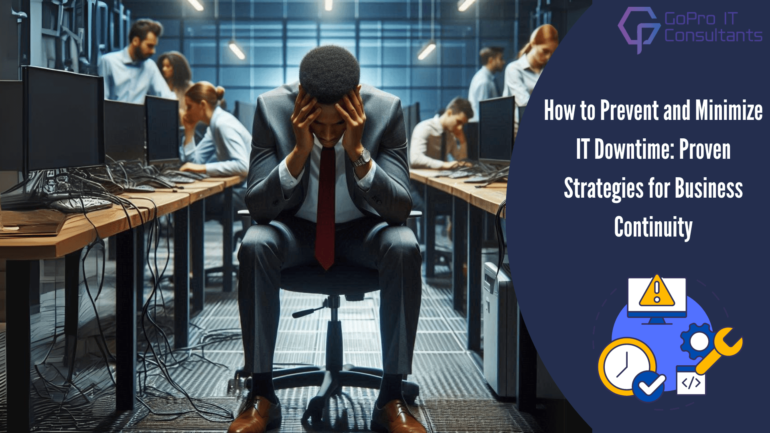
How to Prevent and Minimize IT Downtime Proven Strategies
How to Prevent and Minimize IT Downtime: Proven Strategies for Business Continuity
najeeb rehman September 5, 2024 No Comment

Introduction When IT systems are down or fail, it can cause much trouble for any company. The effect isn’t limited to machines but also affects individuals and can result in massive financial loss. In today’s digital era, the significance of minimizing IT downtime cannot be overstated. Let’s explore effective ways to reduce disruptions and ensure that your business runs smoothly regardless of IT issues. This article will explore proactive methods to reduce IT downtime and develop contingency plans that will keep your business operating smoothly regardless of the circumstances.  The Cost of IT Downtime Downtime Affects Profits and Reputation IT downtime is when IT systems aren’t functioning effectively, which can halt productivity when your company relies on these systems to provide products and services. Every hour of downtime is translated into lost revenue and reduced productivity, and tasks are brought to a halt until the system can be restored. Beyond immediate financial loss, IT outages can affect your business’s reputation. Inadequate deadlines and service delays can cause frustration for customers and lead to a loss of confidence. If a downtime outcome from a cyberattack, or inadequate security methods, customers may be skeptical about your ability to secure their data. To understand the impact of downtime on major businesses check out the infographic below. It outlines some of the largest financial losses suffered by top companies as a result of IT interruptions and illustrates the necessity of efficient IT strategies for resilience. How Much Downtime Can You Afford? Assessing Your Acceptable Risk Level Understanding the amount of downtime you can afford is vital to planning the IT strategy. Are you content having an hour off or would a whole week be doable? Your acceptable downtime limit defines your risk tolerance and directs your investment in continuity or backup systems. For businesses with little risk tolerance, making investments in redundant systems (such as multiple pieces of crucial equipment or an additional internet service provider) as well as IT continuity solutions is crucial to reduce downtime to a minimum. On the other hand, companies that have greater risk tolerance might concentrate on maintaining and replacing the equipment and software regularly and allowing longer periods of downtime in the case of a crisis. What Causes IT Downtime? Top Factors Leading to IT Downtime 1: Third-Party Service Failure Dependence on third-party services like internet providers or Cloud-based software can also lead to downtime. Verify service guarantees and consider having a secondary internet provider or alternative Cloud services to reduce the impact of such failures. 2: Hardware and Network Failure Hardware failures and network interruptions are the main causes of IT downtime. Switches and servers are essential to network communications. Their failure could stop any connected device. Regular maintenance, prompt replacements along with the use of redundant equipment (such as having several servers or switches) are the best strategies to avoid problems like these. Additionally, ensure you have robust system and file backups. 3: Software Issues Software failures can cause substantial downtime. Ageing software that is no longer supported or receives security updates can lead to critical failures. Regularly updating software and having an internal software expert or IT provider can help manage and mitigate these risks. 4: Disasters Unexpected events Natural or accidental disasters could disrupt the security of your IT environment. Although you cannot control all catastrophes you can be prepared with backups stored off-site as well as Cloud storage. Furthermore, sufficient insurance coverage and an effective emergency response strategy are essential for disaster preparation.  5: Cyber Attacks Cyber attacks like DDoS attacks, ransomware, and other online threats can really mess up computer systems. This is a big reason why IT systems sometimes stop working. It’s super important to put strong security measures in place to keep these threats away. 6: Human Error Human mistakes, such as poor security procedures or the misusing in the use of IT systems, could result in the system being down for a while. Effective employee training and IT guidelines for compliance are crucial to reduce the risk.  Methods to Minimize IT Downtime 1: Implement Regular System Maintenance Maintenance of the IT infrastructure is crucial. You wouldn’t drive a car for long without maintenance and your IT systems require regular checks to ensure all is running smoothly. This can include the updating of software, replacing obsolete hardware, and ensuring your network is operating without issue. Prevention of maintenance can benefit from identifying possible issues before they become serious.  2: Develop a Comprehensive Disaster Recovery Plan Approach Disaster recovery plans to provide a security plan in the event of major IT interruptions. The plan should detail the steps required to restore data and restore systems and keep in touch during the entire process. Regularly testing your plan for disaster recovery assures that your plan will function energetically in the event of a crisis. 3: Invest in Network Redundancy Redundancy in networks involves the creation of different routes for data in your system of IT. This ensures that if one route fails, another will replace it, reducing the possibility of a complete network failure. Backup servers and secondary internet connections can help keep your operation running, even if your primary network has problems.  4: Utilize Cloud Solutions Cloud computing is flexible and provides the reliability traditional on-premises systems might lack. Keeping data along with running apps on the cloud, helps reduce the possibility of delays due to hardware failures or local catastrophes. Cloud providers generally offer powerful backup and recovery services essential for minimizing downtime.  5: Strengthen Cybersecurity Measures  Cyberattacks are the leading reason behind IT downtime. Increase your security defences by using firewalls, anti-malware programs, and regularly scheduled security audits. Informing employees about phishing attacks and other cyber-related threats is vital to ensure security on the network.  6: Establish a Business Continuity Plan  Business continuity plans will ensure that essential functions of the business are not interrupted throughout and following IT interruptions. The plan should define the essential services, describe the ways they’ll be kept running during times of

Read More
Ways Managed IT Services Are Revolutionizing the Way You Work
6 Shocking Ways Managed IT Services Are Revolutionizing the Way You Work
Shmaila Munir August 25, 2024 1 Comment

As a dedicated business owner, it’s essential to expertly balance numerous responsibilities, from satisfying customer needs to effectively leading your team and staying ahead of industry trends. One of the worst things you can do is to be burdened by IT issues that drain your employees’ time and energy. Recognize that you need more than off-loading IT tasks and know the necessity to find an expert partner who understands your company’s needs and can benefit you surpass your competition. This is the point where managed IT services can help. They’re not just short-term fixes, but innovative strategies that will streamline your operations in the business, improve your security, and provide you with the competitive edge required to grow your business. 6 Ways Managed IT Services Are Revolutionizing the Way You Work 1. Eliminating the IT Burden Dealing with IT issues in-house can be quite challenging. Unforeseen system failures and regular maintenance tasks can consume a lot of time and money. Managed IT services and Infrastructure Services are specifically created to relieve the burdens associated with managing IT infrastructure. By overseeing the smooth operation of your IT systems, these services enable you to direct your attention towards expanding and developing your business. You won’t have to worry about updating servers or safeguarding your data. With a dedicated team overseeing tasks such as system monitoring and disaster recovery, you can trust that your IT needs are being handled securely. 2. Strengthening Your Cyber Defenses In today’s digital age, cybersecurity risks are an ever-present concern. A single data breach has the potential to disrupt not only your company’s operations but also tarnish its reputation. As a business owner, it’s essential not to risk anything regarding your security. Managed firewalls can be a tremendous benefit in this field. These types of services grant solid security for cyber attacks as well as warrant that all your data is protected. By utilizing advanced threat detection technology and continuous live monitoring, companies can take a proactive approach to cybersecurity. This approach not only allows for swift reaction to security issues but also helps prevent them from occurring in the first place. Employing such proactive measures can provide clients with the assurance that their data is secure and well-protected. 3. Cost Efficiency and Scalability You might be surprised to learn that businesses can save up to 24% savings on annual IT costs by switching to Managed IT Services. That’s because these services are designed to be both cost-effective and scalable. The idea of hiring an in-house IT staff may seem like a great option until you consider the cost of overhead as well as the necessity for ongoing training to stay up-to-date with the most recent technology. Managed IT Solutions offers an affordable alternative that gives you access to a group comprised of IT professionals without the costly cost tag. No matter if you need benefit in the area of managed IT Support and Infrastructure Services or Managed Network Services the services are scalable, meaning they expand with your company. This allows you to place resources where they are needed most so that your company can grow without putting financial strain on it. 4. Supporting Remote Work Seamlessly The move to remote work has revolutionized how businesses operate, however, it also has its own set of difficulties. Making sure your employees have access to all necessary software and data regardless of place of work, isn’t easy. This requires implementing robust systems and processes to enable secure and efficient remote access to critical resources. Management of end-user computing (EUC) Services allows for a smoother change than you would think. These solutions include deploying virtual desktops as well as managing permissions for users so that your employees and you are productive regardless of site. No matter if your team is working at the office, at home, or out on the road You can rest in peace of mind knowing your IT needs of employees are well taken to. 5. Keeping Your Network Running Smoothly An insecure or slow network could slow your business down, creating stress for both you and your customers. With controlled Managed Network Services, you can alleviate concerns about network outages. These services are accessible 24/7 to keep your networks running and detect and fix problems before they impact your operation. Whether it’s optimizing bandwidth, managing connectivity issues, or troubleshooting issues, Managed Network Services warrant smooth operation, which outcome in quicker response times, better service, and more satisfied customers. 6. Streamlining End User Computing The management of devices, applications, and user support can be overwhelming, particularly when your business expands. Managed End User Computing (EUC) Services simplify this task by allowing central control of all devices used by users and applications. When it comes to installing new workstations or computers as well as managing software updates or offering technical assistance such Services assure that your staff have everything they require to function energetically. Ensuring that your equipment is maintained and regularly serviced will reduce the work hours and boost productivity across your organization. Conclusion As a business owner, Your focus should be on growing your business and not getting overwhelmed with IT issues. Managed IT services provide a strategic partnership that can address the most pressing issues you face, whether it’s increasing productivity with automation streamlining remote work processes and enhancing security, or reducing expenses. When you make use of the services offered, you’ll be not only able to keep up with the requirements of the digital age, but you’re also in the forefront. Allow Managed IT Services to be the foundation that will support your company’s expansion, allowing you to concentrate on the things you do best providing exceptional outcomes for your customers. Choosing GoPro IT Consultants for Managed IT Services:  When it comes time to select the right Managed IT Services provider, picking the most appropriate partner can make the difference. A collaboration that is formed with GoPro IT Consultants means more than simply finding an IT service provider. It involves aligning your company’s

Read More
protect business with managed firewall services
Protect Your Business: The Power of Managed Firewall Services
Shmaila Munir July 25, 2024 No Comment

Technology is continually changing, providing incredible ease and efficiency to businesses globally. However, this advancement comes with a huge drawback: rising security worries and hazards. As firms rely more on digital activities, the threat landscape becomes more complex. In this context, managed firewall services emerge as an important solution that not only improves business security but also provides much-needed peace of mind. Overview of Managed Firewall Services A traditional firewall creates a boundary between your inside network and the public internet. It filters traffic coming in and out by following some preset security policies. However, maintaining such a firewall within business premises could be very complex and resource-intensive, especially for businesses with limited staff in the IT department. Managed Firewall Services provides a powerful alternative, which outsources management and maintenance of your firewall to an IT security provider specializing in these types of services. The provider should do everything from setting up the firewall with proper configurations and rules to doing constant monitoring, detecting threats, and updating security measures. Why is Cybersecurity Important for Businesses?  Cybersecurity breaches can mean tragedy for any business. They can lead to immense money loss, defamation, and, in some cases, legal repercussions.  Given below are key reasons why cybersecurity holds this much importance for businesses:  Protection of Sensitive Data:  Businesses have in their possession a treasure trove of sensitive data, including customer information, financial records, and intellectual property. A breach exposes the data to unauthorized persons, possibly causing identity theft, fraud, and other grave problems.  According to itgovernance, 35,900,145,035 known records breached so far in 9,478 publicly disclosed incidents this year. This shows how much data security is at stake. Whether you are a small business owner or own a large enterprise, you are not safe from cyber attacks. Business continuity:  Cyber-attacks are poised to paralyze your IT infrastructure by causing network outages and adversely impacting business operations. This leads to huge financial loss and affects the reputation of the organization.  Regulatory compliance:  Most industries operate under very strict regulations to meet data security. Compliance with industry regulations by businesses avoids such fines and penalties. What is a Managed Firewall Service? Definition and Components:  Managed firewall services are usually end-to-end solutions. This includes the following : Next-generation Firewalls(NGFWs):  NGFWs take the functionalities of ordinary firewalls a notch higher by including deep packet inspection, intrusion prevention systems, and application control.  Expert security configuration and management:  Managed Service Providers (MSPs) have a team of experts who can properly configure your firewall to fit your needs and keep it up to date by installing the latest security patches. Constant monitoring and threat detection 24/7:  Your network traffic is under constant observance by security experts for any suspicious activities, providing the leverage for an instant response with real-time threat detection.  Incident Response and Reporting:  A Managed Service Provider(MSP) will immediately take appropriate action by providing your organization with threat-containment activities in response to a security incident and, concurrently, an incident report. Difference Between Traditional and Managed Firewalls: Traditional firewalls require in-house IT knowledge for setup, ongoing maintenance, and monitoring, all of which can be quite taxing for a business with very few IT resources. Managed firewalls do not involve your staff much, easing the work at the IT department while critical things can be focused on. Benefits of Managed Firewall Services Managed firewall services offer several advantages over traditional firewalls, including but not limited to the following:  Advanced Security:  Designed with layered security measures, managed firewalls come equipped with special features such as advanced threat protection not found in traditional firewalls.  Proactive Threat Detection and Response:  Security experts continuously monitor your network for suspicious activity to identify and stop threats before they inflict damage.  Cost Efficiency and Resource Management:  In most cases, managed firewall services are usually cost-effective compared to the hiring and training of dedicated security personnel.  Enhanced Network Performance:  The updating and maintenance regularly will make it work better at optimum performance for the firewall, thus reducing the latency across your network. How Managed Firewall Services Work: Explained in Detail Typically, managed firewall services should follow this common process: Real-time monitoring and management:  A security specialist keeps looking out for your network traffic using advanced security tools. Incident Response and Reporting:  Where a security incident occurs, the MSP shall immediately make efforts to contain the event, conduct further investigations on the same, and furnish you with a comprehensive report.  Compliance and Regulatory Support:  This is important for all managed service providers to ensure that the configuration of their firewall meets the minimum industry requirements, regulatory standards, and compliance levels. Impact on Business Operations Managed firewall services affect operations in several ways: Enhanced Network Performance:  Regular updates and maintenance help you to keep your network operational and running smoothly.  Less Downtime and Fewer Disruptions:  Proactive threat detection and response lower the probability of network outages and subsequent disruptions due to cyber attacks.  Increased Business Continuity:  Managed firewalls enable your business to run normally without hitches, even when an insecurity issue has occurred.  Choosing the Right Managed Firewall Service Provider Selecting the Most Suitable Managed Firewall Service Provider When choosing a managed firewall service provider for your business, some of the greatest aspects that should determine the choice are: Key Features to Consider:  Professional Security Expertise:  Look out for a provider with an innate core area of specialization in the cybersecurity domain that has seasoned security professionals. Qualifications from such staff may be assured by certifications—for instance, CISSP (Certified Information Systems Security Professional) or CompTIA Security+.  Advanced Security:  Assure the next-generation firewall by utilizing deep packet inspection, intrusion prevention systems, controls at an application level, and sandboxing to detect and prevent the newest and most advanced cyber threats.  24/7 monitoring and support: Choose a provider that provides 24/7 monitoring and support for guaranteed network safety even during off-hours. Look for these kinds of providers: SIEM solutions for centralized log collection and analysis.  Scalability and flexibility:  As time goes by, your business’s security requirements may evolve. Opt for a

Read More

Recent Posts

  • Network Management Services: Are they Beneficial for Your Business?
  • IT Support and Services: A Complete Guide for Modern Businesses
  • It Solution Provider and Do You Need One?
  • Managed IT Support: The Ultimate Guide For UK Businesses
  • The Growing Problem of E-Waste: Causes and Effective Solutions

Recent Comments

  1. najeeb rehman on Why Your Business Needs an IT Consultant: Signs Your IT Infrastructure Is Holding You Back
  2. vishnu on Why Your Business Needs an IT Consultant: Signs Your IT Infrastructure Is Holding You Back
  3. Vishnu on 6 Shocking Ways Managed IT Services Are Revolutionizing the Way You Work
  4. najeeb rehman on Why Your Business Needs an IT Consultant: Signs Your IT Infrastructure Is Holding You Back
  5. ps collaborations on Why Your Business Needs an IT Consultant: Signs Your IT Infrastructure Is Holding You Back

About

GoProIT Logo

A one-stop solution for all your IT needs. IT Industry Leader providing excellent IT managed services and consultancy in over 50 countries. Providing support in areas including Data Centers, Rollouts, and Firewall services.

  • Facebook
  • LinkedIn
  • Instagram

Contact

Email: sales@goproconsultant.com

Ph # +44 203 868 3988

Adress: Unit 9105, 141 Access House Morden Road, Mitcham, Surrey, England, CR4 4DG, United Kingdom

Global Coverage

  • Asia
  • Africa
  • America
  • Australia
  • Latin America
  • Middle East

Quick Links

  • Careers
  • Privacy Policy
  • Terms of Use
  • Contact Us
  • About Us
Uptech Theme || LockThemes